
Name the sludge-generating process
Industrial sludge may contain metal hydroxides, mineral fines, fibers, oils, biological solids or mixed residuals. Identify the production step, upstream coagulants, pH adjustment and batch cycle.
The broad name industrial sludge is not enough for selection. Supply a current sample and the expected operating range, including cleaning or product-change events.
Decide which response matters
Set measurable priorities such as capture, filtrate clarity, cake dryness, throughput, release from cloth or stable torque. Different disposal and recycle routes can assign different value to each result.
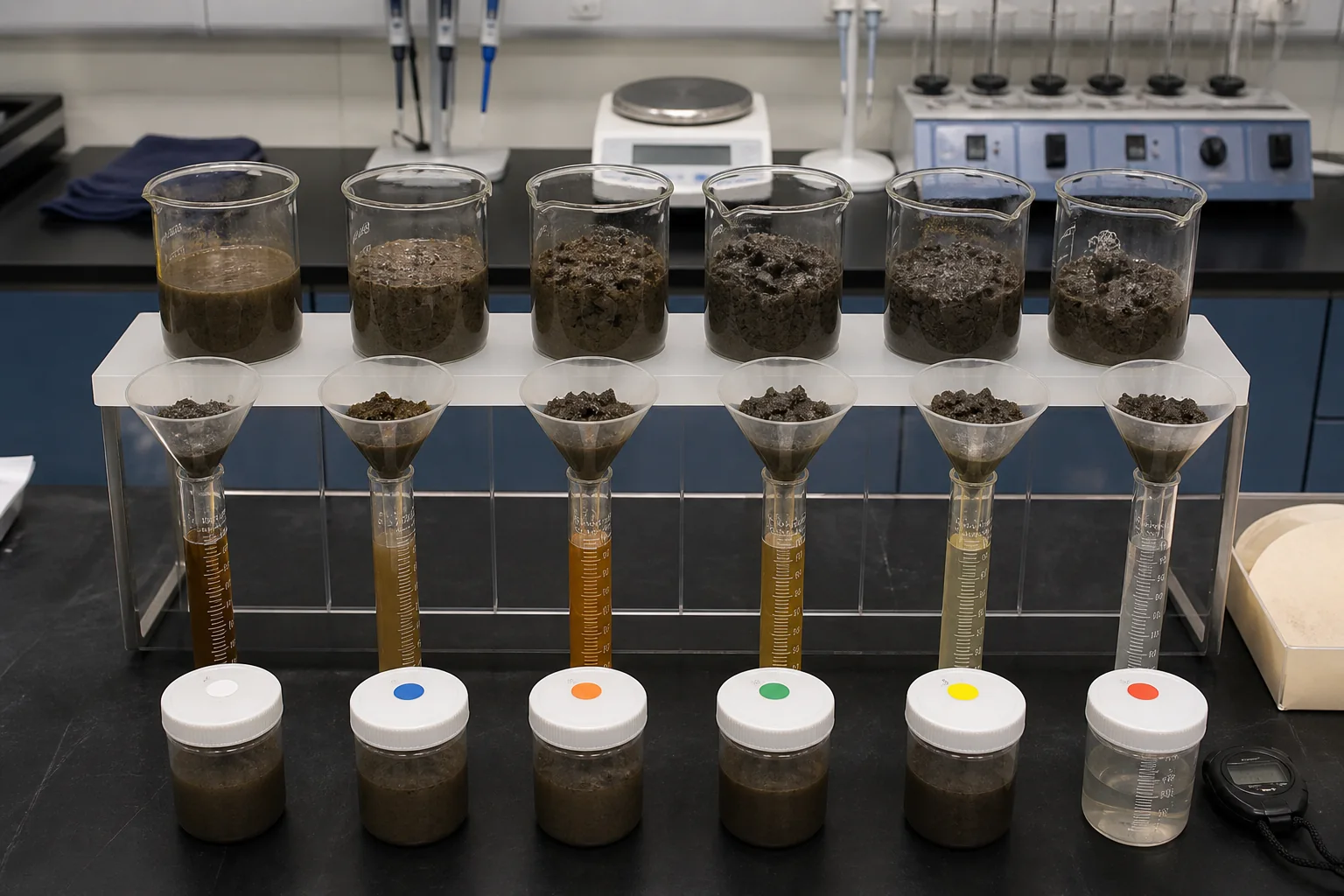
Use the same priorities for the bench screen and plant trial. A visually impressive floc is not an acceptance criterion unless it produces the required separator outcome.
Screen more than ionic family
Surface chemistry can change with ore, coating, metal, surfactant or oil content. Evaluate plausible ionic profiles and molecular structures without treating anionic, cationic or nonionic labels as complete grades.
Keep active dose and preparation constant during the first comparison. Then optimize the best few candidates around their effective window.
Challenge the floc with real hydraulics
Recreate the order of addition, mixing and time to separation. High-shear pumps, long pipes or excess residence can break a floc that looked stable in a jar.
For variable batch waste, test representative lots separately and define a response plan rather than averaging incompatible results.
Normalize technical and commercial data
Calculate active polymer per dry solids and record cake or liquid outcome at each point. Compare delivered cost on the same active and performance basis.
Include make-down labor, water, throughput, recycle load and disposal mass. A cheap kilogram can be expensive when consumption or sludge volume rises.
Request traceable samples
Give the supplier process source, analytical range, current treatment, machine and target result. Label every sample and preserve its preparation and trial record.
Require COA, SDS, packaging, storage and shipment information for the proposed code. Do not infer certifications or regulatory suitability that the documents do not establish.