
Separate precipitation from solid-liquid separation
A dewatering polymer acts on the solids presented to the press; it should not be purchased as a substitute for controlled metals precipitation. Describe the precipitating chemicals, pH history, coagulants and feed solids. Identify batch differences and any oils or complexing agents that may change the residual.
Take the sample after the normal precipitation and settling steps. Clear filtrate does not establish dissolved-metal removal or regulatory compliance. Define the necessary analytical and waste-classification checks separately with the responsible site team, rather than implying that a floc photograph proves the required treatment result.
Screen for permeability without losing fines
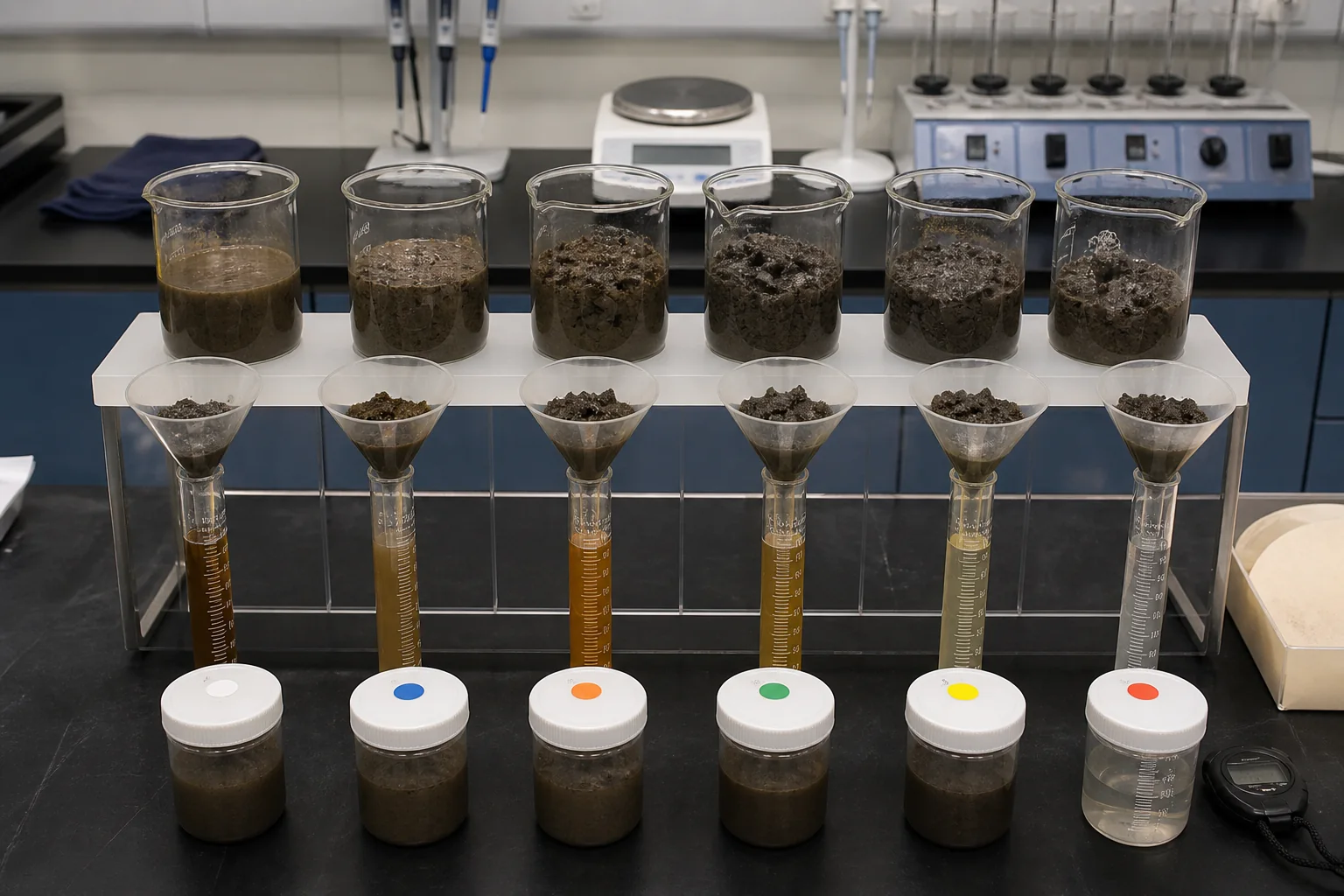
Test plausible polymer families on the actual precipitated solids. Hold preparation, dose basis, mixing and elapsed time consistent, retaining a conditioned reference and an untreated comparison. Observe drainage, filtrate solids and response after transfer shear, not merely the amount of settled material visible in a beaker.
Avoid assuming that an ionic family is suitable for every metal-hydroxide mixture. Changed pH adjustment or coagulant use can alter the response. If additional conditioners are proposed, record their separate dose and added dry mass so polymer savings are not created by moving cost or solids to another reagent.
Carry the comparison through a complete press cycle
Record filling behavior, pressure progression, filtrate quality over the cycle, cake solids and release from the installed cloth. Include the selected cycle endpoint and cloth condition. A short initial filtration observation cannot show whether later compression yields a stable, removable cake at the required throughput.
Do not instruct a press to exceed its approved operating limits to improve a chemical comparison. Keep equipment and cloth changes visible. When a candidate improves cake at the cost of much longer cycles or more manual cleaning, price that operating consequence rather than reporting dryness alone.
Write a shipment and acceptance brief
Provide residual source, pH and solids range, upstream chemicals, press type, cloth information where available and the current operating bottleneck. Request coded candidates and a plant-trial quantity sufficient for complete cycles and repeats. Include product documents, handling requirements and any site-specific restrictions in the RFQ.
Approve the production identity only for the feed and cycle conditions demonstrated. Preserve the trial record beside the delivery and lot documentation. A later precipitation-program change should trigger a comparison on new current sludge, not an assumption that the original polymer order remains technically equivalent.
Prepare a focused sample and quotation request
Send the precipitation sequence, press cycle, cloth condition, measured filtrate and site-specific documentary requirements. Keep dissolved-metal and waste-classification checks separate from the polymer's solids-separation qualification when defining the shipment release. Preserve the baseline from the corresponding operating qualification.
Related purchase checks: Sludge Polymer for Plate Filter Presses: Buy Against the Complete Cycle; Sludge Polymer First Delivery: Link Lot Acceptance to the Approved Sample. Submit the defined requirement with the sludge polymer sample and quotation request.