
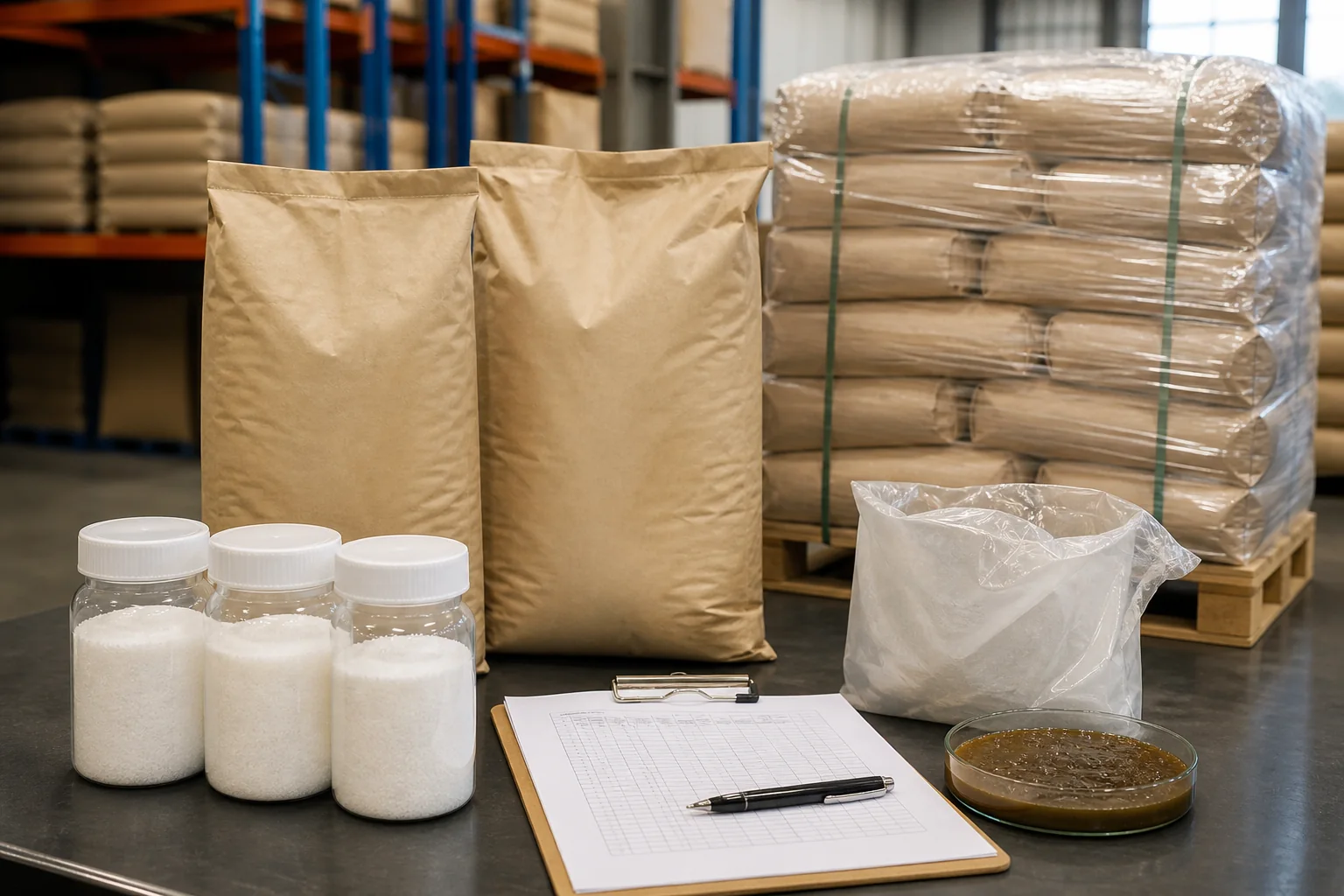
Match the commercial shipment to the trial identity
Before unloading, compare purchase order, product code, package markings, lot and quantity with the approved quotation. Preserve any written relationship between laboratory sample code and production identity. A similar trade name, charge description or bag design does not establish that the delivered material is the qualified grade.
Obtain documents applicable to the actual shipment and current product. Review stated storage and shelf-life conditions against arrival and planned use. If identity is unclear, use the plant's hold-and-release procedure and seek clarification rather than blending uncertain material into an approved stock position.
Inspect handling evidence without overinterpreting it
Record damaged packaging, moisture exposure, leaks, unusual physical condition and missing markings. Photograph observations and retain delivery records. Physical inspection can reveal a handling problem but cannot prove or disprove dewatering performance. Do not reject or approve a chemical solely because a package looks different from a sample container.
For powder, evaluate feeder and wetting behavior where part of the accepted specification. For a liquid formulation, use the applicable storage, compatibility and preparation checks. Handle samples according to the SDS and site procedures; avoid improvised chemical tests that create exposure without a validated acceptance method.
Use a paired current-sludge comparison
Prepare the shipment sample and a retained approved reference using recorded water, concentration, age and calibrated active dose. Test them on the same well-mixed current sludge and include repeats where variation could obscure a difference. Comparing a fresh delivery with last month's result cannot separate material change from sludge change.
If the bench comparison differs materially, verify preparation and measurement before attributing fault. Preserve the unsuccessful points and the exact product and solution labels. Escalate with evidence rather than only a photograph or a higher pump setting observed during an unrelated shift.
Release with a repeatable record
Confirm the first routine machine period against the agreed capture, cake, throughput and dose range. Keep delivery, laboratory and operating records under the same lot identity. Define who may release a deviation and what follow-up evidence is required; a receiving check should not create an undocumented substitute specification.
Retain a representative sample under suitable conditions for an agreed period when practical. Reuse the same approach for later shipments at a frequency justified by the plant's quality procedure. Consistent records help distinguish a genuine product concern from storage, make-down or feed variation without automatically blaming either party.
Prepare a focused sample and quotation request
Provide the accepted sample code, shipment identity, package observations and proposed paired comparison. Request a lot-specific document response and a defined release decision rather than accepting a generic assurance that the shipment matches the catalogue. Preserve the baseline from the corresponding operating qualification.
Related purchase checks: Changing Sludge Dewatering Polymer Supplier: Plan a Fair Crossover Trial; Multi-Plant Sludge Polymer Supply: Separate Site Approvals Within One Contract. Submit the defined requirement with the sludge polymer sample and quotation request.