
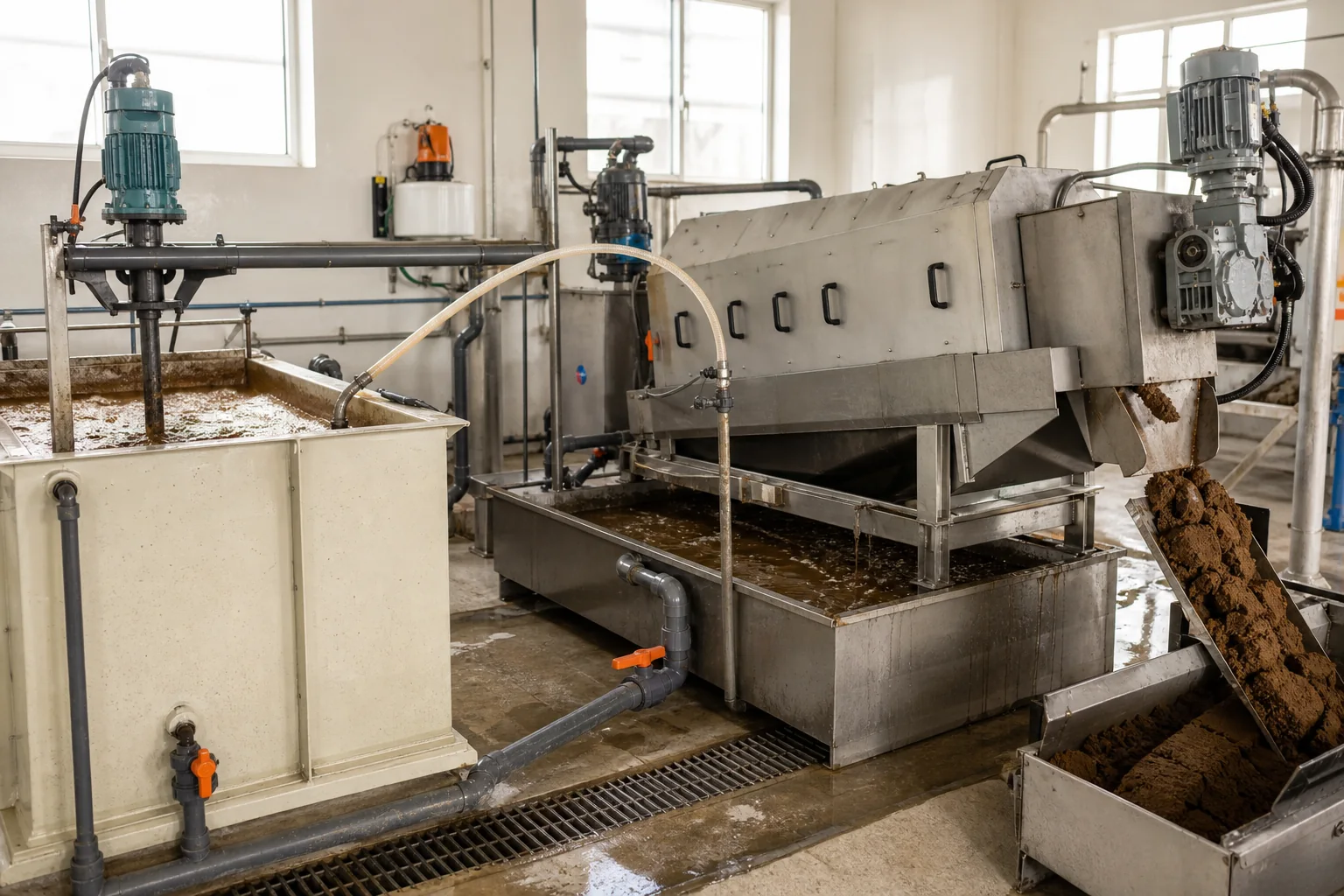
Describe the actual wasted biological solids
Waste activated sludge can change with biological process, solids retention, production load and the wasting schedule. State whether the separator receives direct WAS, thickened WAS or a mixed feed. Record dry solids, storage, temperature and the current upstream chemical program so a supplier does not screen against an undefined biological sample.
Collect material from the real feed point and identify the operating period it represents. Avoid assuming that a return-activated-sludge sample or a settled laboratory fraction is interchangeable with the dewatering feed. Keep normal and difficult conditions separate when their treatment responses are materially different.
Ask for a bounded cationic screening set
Cationic products are often a reasonable starting family for biological sludge, but neither the highest nominal charge nor the longest claimed chain identifies the best grade. Request a small selection with a stated reason for each candidate. Confirm product form, active basis and preparation conditions before equal-dose comparisons.
Evaluate drainage and fine-solids capture after a controlled mixing challenge. A soft floc that looks large under gentle handling may not survive transfer or machine action. Use the existing drainage and filtrate test procedure to preserve consistent observations rather than ranking samples by appearance alone.
Make the liquid return part of acceptance
Specify acceptable filtrate or centrate and the dry-solids throughput that must be sustained. Poor capture can return biological solids to the liquid process even when the cake looks manageable. Record the actual recycle route and its monitoring limits instead of assuming clear-looking liquid proves an acceptable return load.
Compare cake solids, discharge stability and operator interventions at the same time. If a candidate improves capture only by producing an unworkable sticky cake or reducing throughput, make that trade-off explicit. The purchase target is a balanced separation result on the installed machine, not maximum floc size.
Qualify against wasting and storage variation
Repeat the preferred condition across the intended wasting schedule and realistic holding times. Calibrate product delivery and recalculate active dose when feed solids move. A pump rate approved during concentrated feed should not become a fixed instruction for every biological condition.
Send the supplier the feed windows, machine limits, repeated results and the required sample or monthly quantity. Approve the production code together with preparation and supply documents. Define when a biological-process change calls for re-screening rather than automatically ordering a higher-charge product.
Prepare a focused sample and quotation request
Specify the WAS collection point, wasting schedule, holding period and current dry-solids range. Include the recycle and cake-handling limits alongside the machine duty so the sample request targets a biological feed the plant can actually demonstrate. Preserve the baseline from the corresponding operating qualification.
Related purchase checks: Polymer for Mixed Primary and WAS Sludge: Qualify the Purchase Blend Range; Polymer for Aerobically Digested Sludge on Screw Presses: Purchase Requirements. Submit the defined requirement with the sludge polymer sample and quotation request.