Ask what the offer actually includes
A proposed switch from powder to emulsion changes more than the purchase unit. Request confirmation of available product codes, documented active basis, package format and preparation instructions. Keep the product proposal separate from equipment, installation and commissioning services unless the quotation explicitly includes them.
State the reason for considering conversion: labor, preparation consistency, footprint or operating flexibility. Set a measurable objective and preserve the current powder program as the comparison. A liquid package is not evidence of lower total consumption, and a convenient dosing arrangement does not establish dewatering equivalence.
Qualify inversion under real water conditions
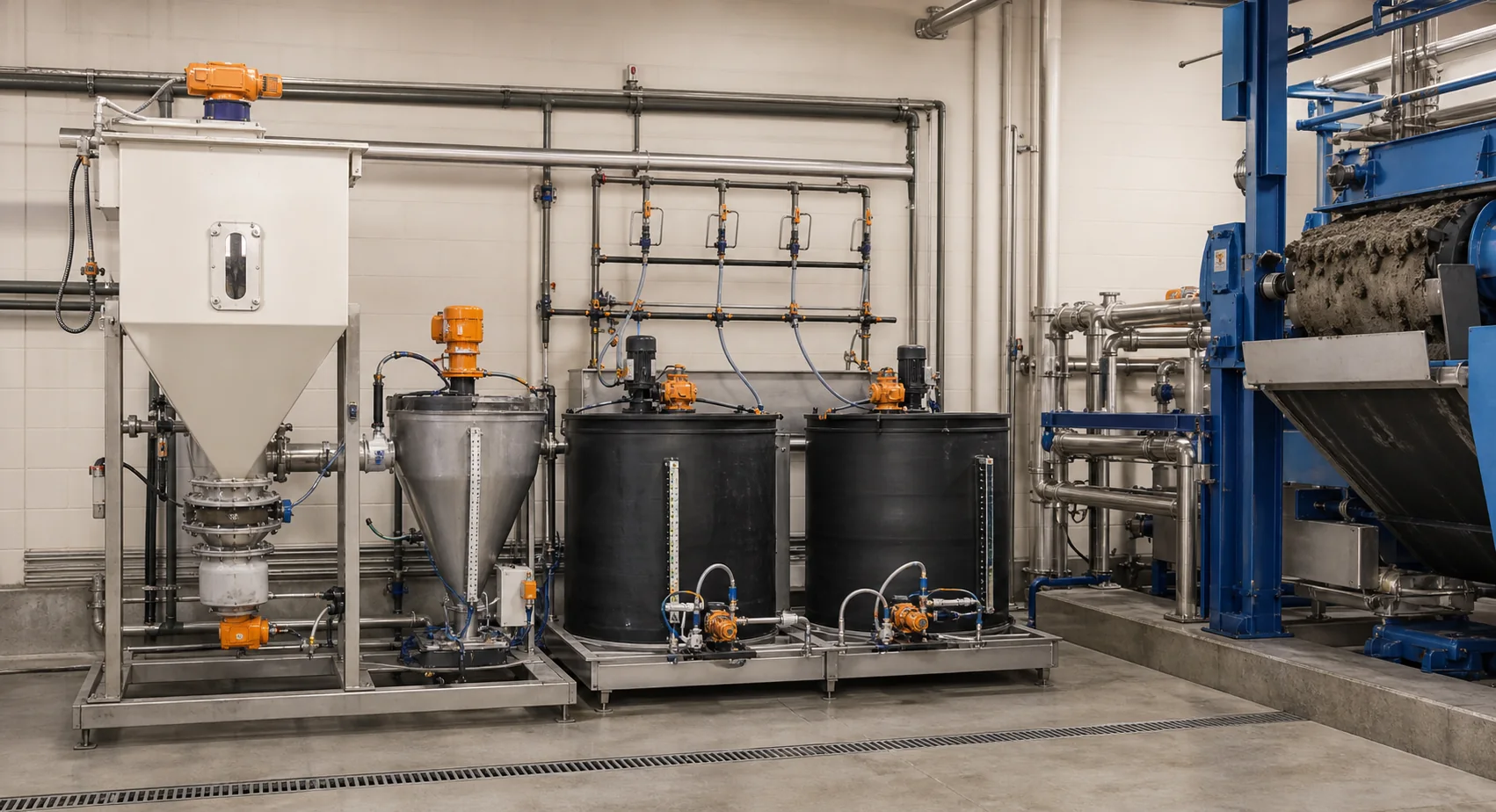
An emulsion must be prepared according to the proposed product's inversion and dilution requirements. Evaluate available water flow, temperature, pressure and mixing at the intended production rate. The initial release and subsequent solution maturation are part of the system being purchased, not optional laboratory refinements.
Have the supplier identify restrictions and the checks needed to verify preparation. Compare candidates using independently recorded solution quality and active dose. Do not attribute a failure to the polymer until the inversion method is shown to be suitable for that code and the installed unit.
Review handling and metering before delivery
Confirm package unloading, compatible wetted materials, product storage, recirculation or agitation requirements where specified, and metering turndown. Obtain the current SDS and the supplier's storage instructions rather than transferring powder-handling practices to a liquid formulation. Use actual product properties when assessing pump output.
Plan the changeover and line clearance so the incumbent and candidate are not unintentionally blended. Identify who supplies hoses, connections, containment and operating instructions. Document disposal or return arrangements for packages if relevant; do not assume they are included in a nominal delivered price.
Release only after an active-basis crossover
Hold sludge and machine conditions stable and compare capture, cake solids, throughput and operational interventions over repeated periods. Recalculate supplied-product flow from the confirmed active basis. Include preparation utilities, labor and any equipment costs in the commercial comparison without inventing savings for unmeasured benefits.
Request a coded trial supply with enough material to clear transitions and repeat the preferred point. Approval should identify the emulsion code, preparation method, machine window and delivery scope. If supply availability or compatibility remains unconfirmed, retain it as a qualification item rather than converting a tentative proposal into a purchase specification.
Prepare a focused sample and quotation request
List the inversion unit, water supply, storage arrangement and the equipment changes included or excluded from the proposal. Request confirmation of product availability and a coded trial quantity before assigning a routine emulsion delivery schedule. Preserve the baseline from the corresponding operating qualification.
Related purchase checks: Sludge Dewatering Polymer Price: Compare Chemical and Wet-Cake Costs; How Much Sludge Dewatering Polymer Should a Plant Trial Order Include?. Submit the defined requirement with the sludge polymer sample and quotation request.