
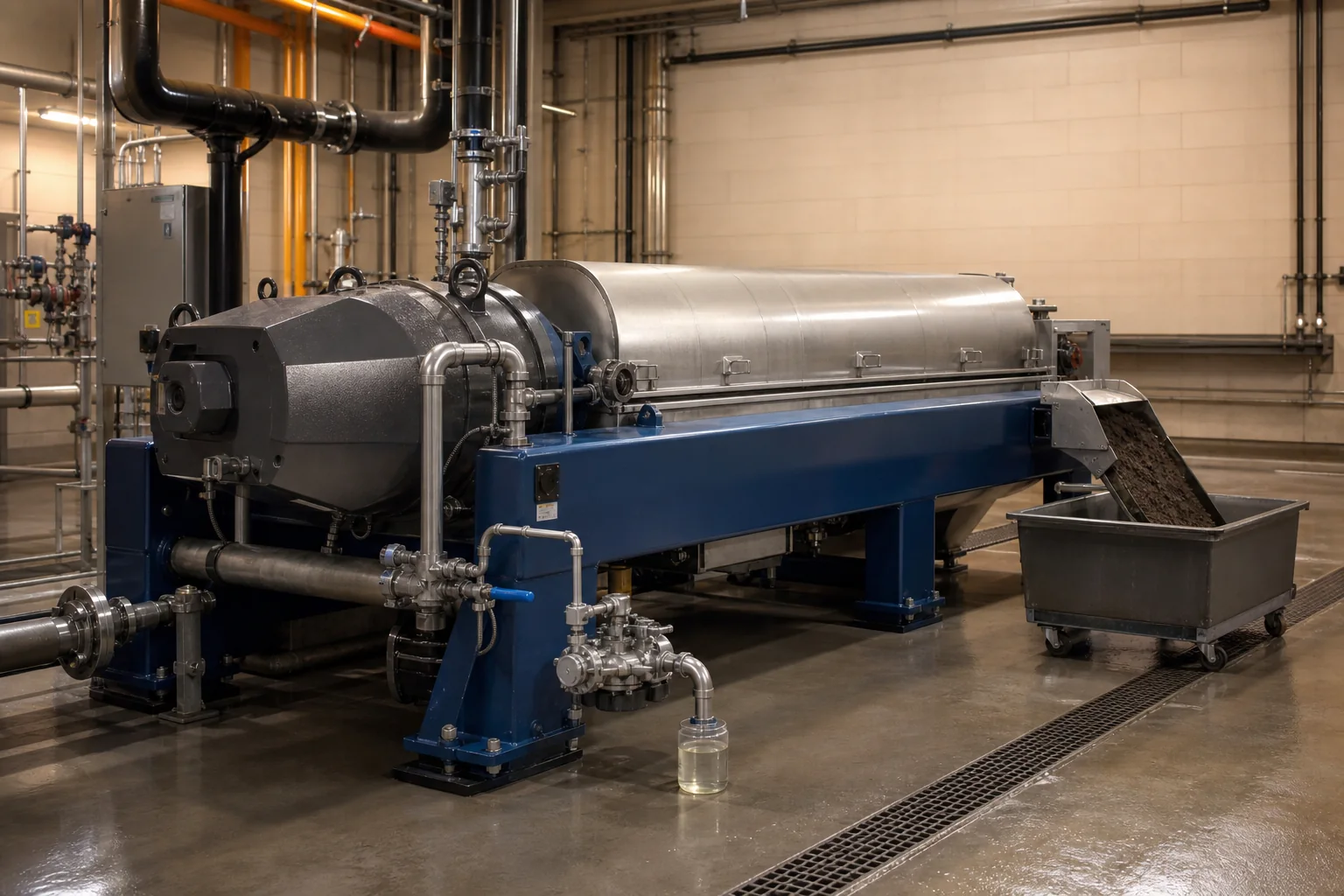
Freeze the machine baseline
Record bowl speed, differential speed, pond setting, feed flow, feed solids, torque and temperature. Stabilize the machine before changing product.
Without a baseline, an apparent chemistry improvement may simply reflect a scroll or hydraulic adjustment.
Model feed-zone shear
Condition samples consistently, then expose them to a repeatable high-energy step. Inspect supernatant or filtrate after the challenge.
This does not replace a plant trial, but it helps remove candidates that only form attractive floc under gentle mixing.
Control active dose
Convert polymer feed to active mass and sludge flow to dry-solids mass. Recalculate whenever feed solids or product concentration changes.
Record the original measurements as well as the normalized dose so operators can verify the calculation.
Optimize as a system
Watch centrate solids, cake solids, torque, throughput and scroll stability together. Allow enough residence for each setting to reach steady response.
High capture with unstable torque or wet cake is not a finished optimization. Adjust chemistry and machine settings in a deliberate sequence.
Check delivery hardware
Verify polymer aging, dilution water, pump output, injection quill and the absence of a destructive pump downstream. Calibrate with the actual solution.
A feed restriction can create rapid centrate deterioration that is wrongly blamed on the product.
Approve a range
Repeat the chosen candidate at normal and difficult feed conditions. Define allowable centrate, cake, torque and active-dose ranges.
Preserve the approved product code, sample lot and preparation method with the supply specification.
Separate chemistry effects from machine effects
When centrate worsens, first note whether torque, differential speed, feed rate or pond setting moved at the same time. Restore a stable baseline before testing a new polymer point.
Use a planned sequence: baseline, chemistry change, stabilization, measurement and return check. This makes it possible to distinguish a real product response from retained material or a delayed machine response.
Use centrate solids for mass-balance context
Visual clarity is useful for rapid checks but does not quantify the solids returned to the liquid process. Use a consistent suspended-solids method or another validated plant measurement during approval trials.
Pair the liquid result with feed and cake measurements where practical. A mass-balance check can reveal whether an apparent cake improvement came from lower capture or a genuine dewatering gain.
Manage stabilization and carryover
A centrifuge does not respond instantly when polymer or machine settings change. Estimate the system delay from the polymer feed point through the bowl and downstream sampling location, then hold each condition long enough for prior material to clear.
Label samples with the corresponding feed interval rather than the collection time alone. When returning to the incumbent or baseline setting, verify that centrate, torque and cake also return. This return check strengthens the causal conclusion and can reveal a feed change that occurred during the trial. Exclude transition samples from the final comparison and record the actual stabilization time for the next trial.