
Separate a charge label from an approved grade
A request for high-charge cationic polymer leaves several purchasing questions unanswered. Suppliers may describe charge using different methods or scales, while chain structure, product form and preparation can change the response on the same biological sludge. A nominal charge figure is not a transferable machine-performance specification.
Ask the supplier to identify the charge-description method, the supplied product code and the basis of any molecular-weight claim. Record these as product descriptors, not as proof of equivalence to an incumbent. A wider catalogue range is useful only when the proposed candidates address the actual feed and separator.
Write the operating boundary beside the product description
Include sludge origin, dry-solids range, volatile fraction where available, upstream coagulants and holding history. Name the separator and distinguish rapid drainage from resistance to centrifuge feed-zone shear. These conditions help prevent an attractive laboratory sample from being offered for a different duty.
State which operating limits cannot be traded away: acceptable filtrate or centrate solids, required throughput, cake handling and equipment loading. Specify measured outcomes and test conditions rather than copying an unsupported universal cake-solids promise into the purchase description.
Require a usable preparation envelope
Request the recommended make-down concentration, water requirements, hydration or inversion procedure and usable solution-age window for each code. The candidate must work within the installed wetting, aging, dilution and pumping system. Product strength alone cannot compensate for incomplete preparation.
During qualification, record actual preparation rather than merely filing the supplier instructions. If the proposed method needs a larger aging tank or a different feed arrangement, identify that requirement before commercial ranking. Otherwise a lower quoted dose may depend on equipment the plant does not have.
Keep laboratory acceptance separate from shipment acceptance
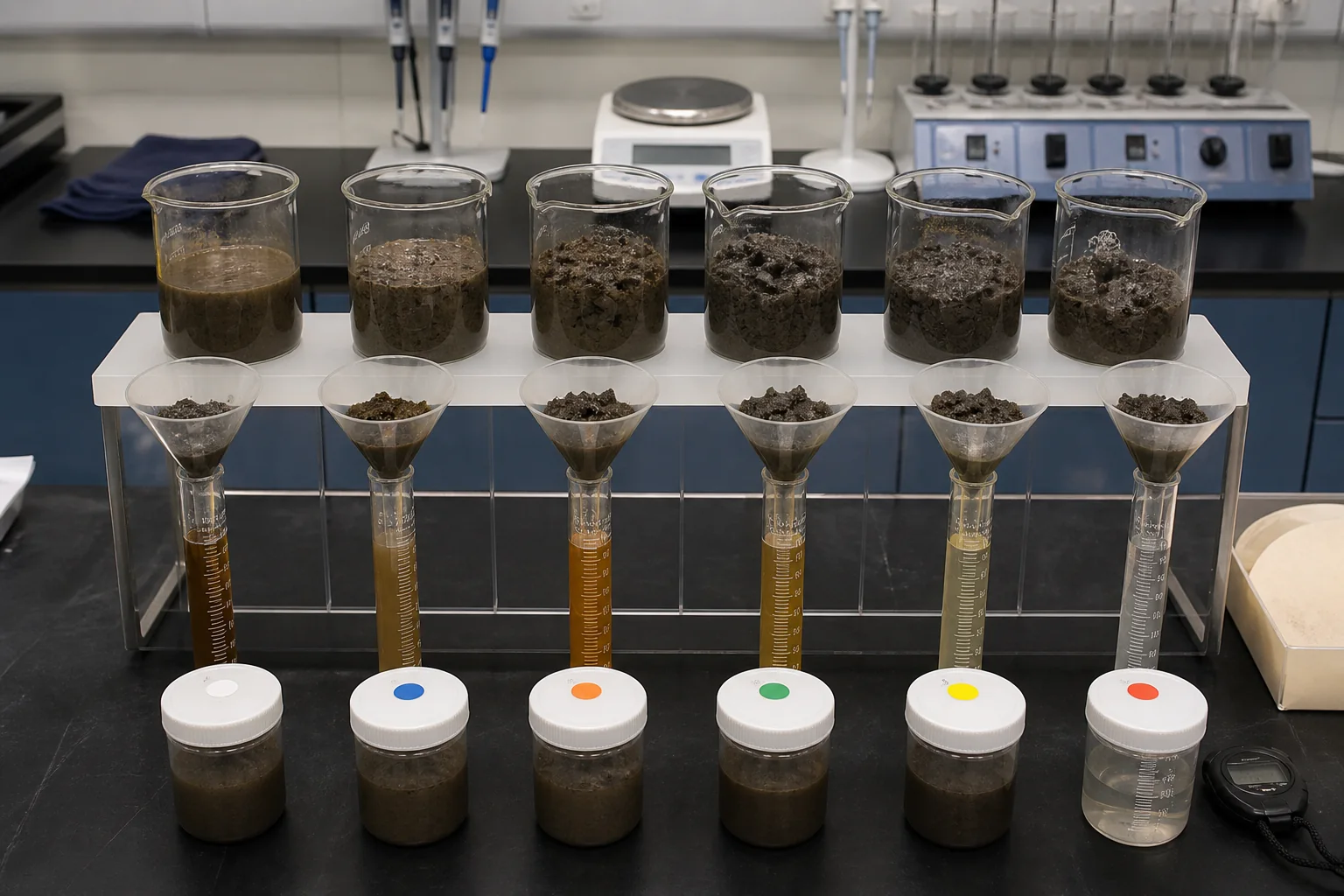
Advance candidates using matched active-dose tests on current sludge and then confirm a controllable range on the machine. Link the accepted sample code, trial record, quotation and production product code. Define how an alternative code or formulation would be evaluated instead of accepting substitution by charge label.
For receiving, agree on package identity, lot documents, storage condition and a retained-reference comparison when appropriate. A COA supports identity and specification checks; it does not replace the plant evidence. Record any unverified descriptor as an open qualification question rather than silently treating it as an accepted limit.
Prepare a focused sample and quotation request
Send the proposed charge-description basis, candidate codes and installed preparation limits with the sludge and machine record. Identify which grade descriptors still need supplier confirmation; the purchase specification should distinguish these open questions from the acceptance limits already demonstrated. Preserve the baseline from the corresponding operating qualification.
Related purchase checks: Sludge Dewatering Polymer Price: Compare Chemical and Wet-Cake Costs; Changing Sludge Dewatering Polymer Supplier: Plan a Fair Crossover Trial. Submit the defined requirement with the sludge polymer sample and quotation request.