
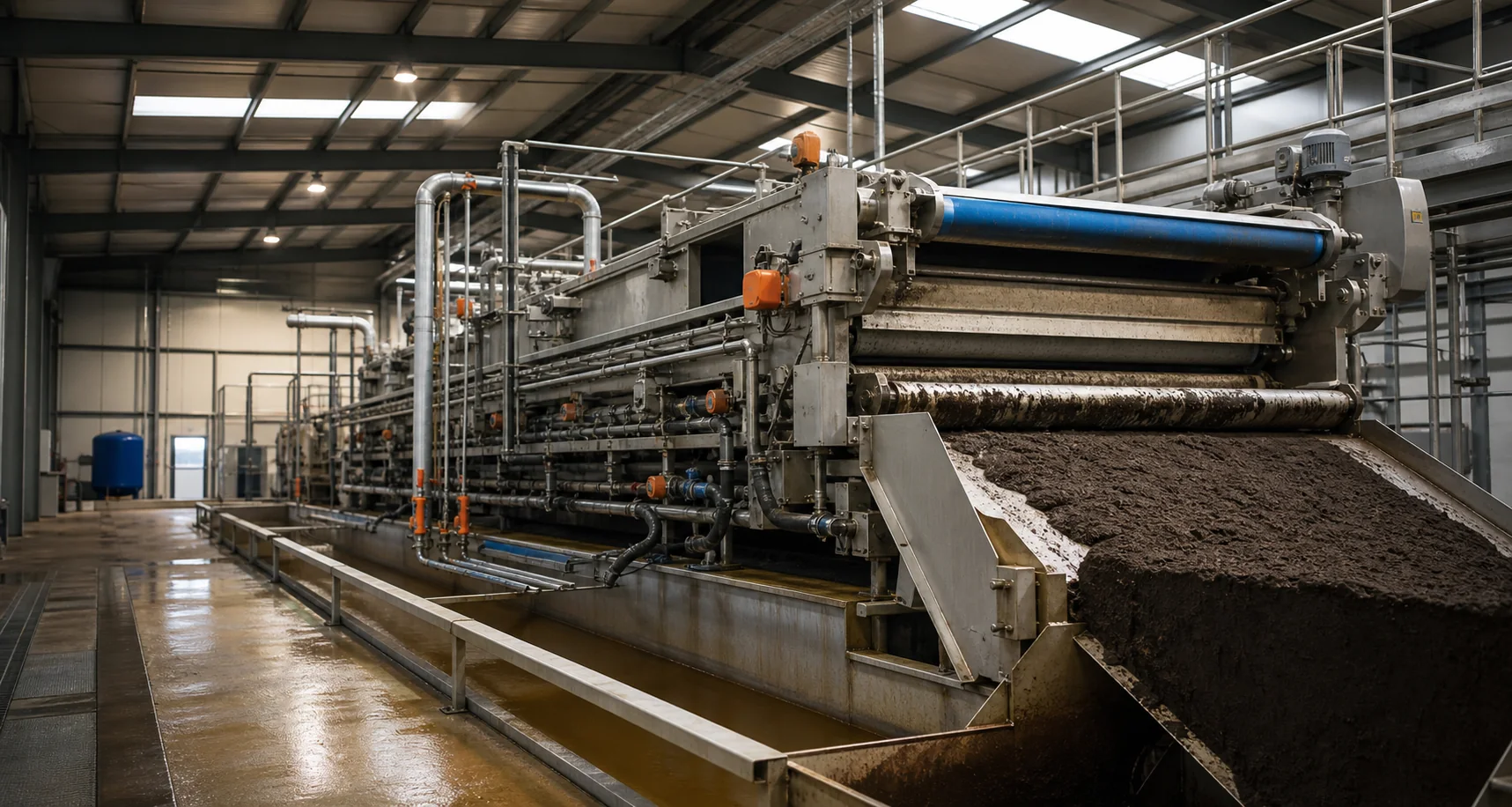
Map the belt press zones
A belt press first relies on gravity drainage, then wedge and pressure zones. Observe where water release begins, whether solids escape at the edges and where cake starts to smear or stick.
Record belt speed, feed rate, feed solids, wash-water condition and pressure settings with every trial. These variables can mimic a chemistry change.
Select for drainage and strength
The polymer must open a drainage path quickly while producing a floc that survives transfer and compression. Very large, soft flocs may drain in a cup yet collapse on the belt.
Use a drainage test followed by controlled shear. Carry the leading candidates to a short machine trial at matched dry-solids loading.
Locate and dilute the dose
Injection should provide distribution without unnecessary shear. Secondary dilution can improve contact, but excess water or a poor injection quill can reduce consistency.
Document solution concentration, dilution ratio, feed point and contact time. Keep the sequence fixed while comparing products.
Use a balanced scorecard
Measure filtrate solids or clarity, solids capture, cake solids, throughput, belt wash demand and cake release. Note spray or edge loss that affects housekeeping.
Optimize active dose around the whole scorecard. Chasing only cake solids can overload the press or reduce capture.
Diagnose before increasing dose
When drainage falls, inspect feed solids, polymer solution, pump calibration, belt condition, wash nozzles and upstream chemistry. More polymer cannot repair every mechanical or preparation fault.
Run a fresh solution check and compare a retained reference grade. Change one variable at a time so the cause remains visible.
Define the plant acceptance run
Choose a stable test period and document baseline, candidate settings and feed conditions. Repeat the preferred point long enough to observe cake handling and filtrate recycle.
Approve a working range, not a single pump setting. State the dry-solids dose and the feed window covered by the result.