
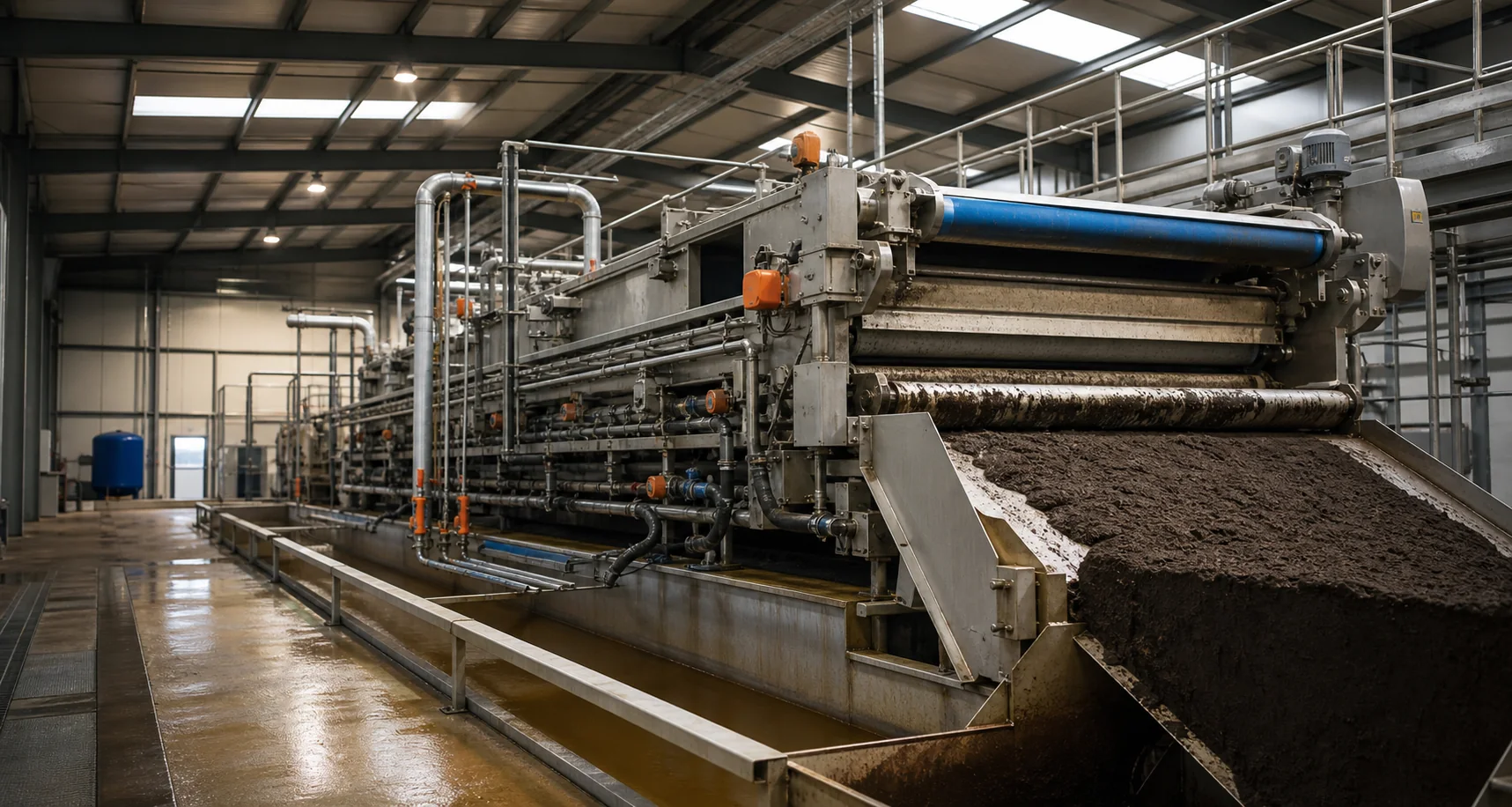
Establish a mechanical baseline
Confirm belt speed, tension, pressure, feed distribution, wash-water pressure and cloth condition before a chemistry test. Record feed flow and solids.
A worn belt, blocked spray or uneven feed can dominate the result and invalidate a product comparison.
Test gravity drainage first
Use a repeatable screen or funnel method to observe initial water release and filtrate quality at equal active dose. Note whether floc blocks the screen or releases fines.
Fast drainage matters, but it is only the first zone of the press. Carry promising samples into a shear and compression check.
Challenge floc strength
Apply a defined mixing step after conditioning and repeat the drainage observation. This approximates transfer and wedge-zone stress better than gentle inversion alone.
A robust candidate retains capture and drains after the challenge. Reject a grade whose visual floc disappears under realistic handling.
Run a controlled belt trial
Set a documented baseline, then change one chemistry variable at a time. Keep solution preparation, dilution and feed point constant while comparing grades.
Allow sufficient belt travel to clear the previous condition. Record edge loss, spray, cake release and operator interventions.
Calculate total value
Compare active dose, throughput, cake solids, capture and wash demand. Include downstream recycle and disposal effects.
The economic optimum is a stable operating window, not automatically the minimum feed rate or driest isolated cake.
Document acceptance
Repeat the best condition and record feed variability, settings, sample lot and preparation. State what happens when solids loading moves.
Attach the approved evidence to the purchasing record so production supply is compared with the actual trial sample.
Interpret belt symptoms by press zone
Free water that fails to release in the gravity zone can indicate weak conditioning, poor distribution or a blinded belt. Edge loss in the wedge zone can indicate excessive loading, fragile floc or uneven feed.
Smearing and difficult cake release in the pressure zone may reflect overdose, unsuitable chemistry, wet cake or belt condition. Locate the first visible failure before changing polymer or mechanical settings.
Hold a repeatable production confirmation
Confirm the preferred condition over enough belt revolutions to observe filtrate, cake discharge, wash demand and operator intervention. Record feed-solids samples at the beginning and end of the period.
Repeat the condition on another representative shift before commercial approval. The release record should state the demonstrated throughput and feed range, not imply performance outside the evidence.
Calculate the disposal consequence
Translate cake-solids differences into the estimated wet cake mass handled for the same dry-solids production. Use measured cake samples collected after steady operation and account for realistic variability rather than one unusually dry grab sample.
Compare that result with capture, polymer consumption, belt speed and wash demand. A small dryness gain may be valuable when hauling or disposal dominates cost, but it is not beneficial if lower capture increases recycle loading or the press loses stable throughput. Keep the calculation beside the trial record so purchasing can compare total treatment value.