
Separate seasonal demand from preparation change
A winter order should not simply repeat summer consumption with a larger reserve. Record incoming make-down water temperature, sludge temperature, feed solids, operating hours and any changed storage conditions. Cold-season difficulties may originate in preparation or feed response rather than an unexplained change in chemical quality.
Ask the supplier to confirm the proposed code's preparation and storage requirements. Do not assume one universal hydration time or freeze tolerance across product forms. Keep liquid-product handling guidance distinct from powder moisture protection and follow the applicable SDS and supplier instructions.
Test the preparation system at the actual temperature
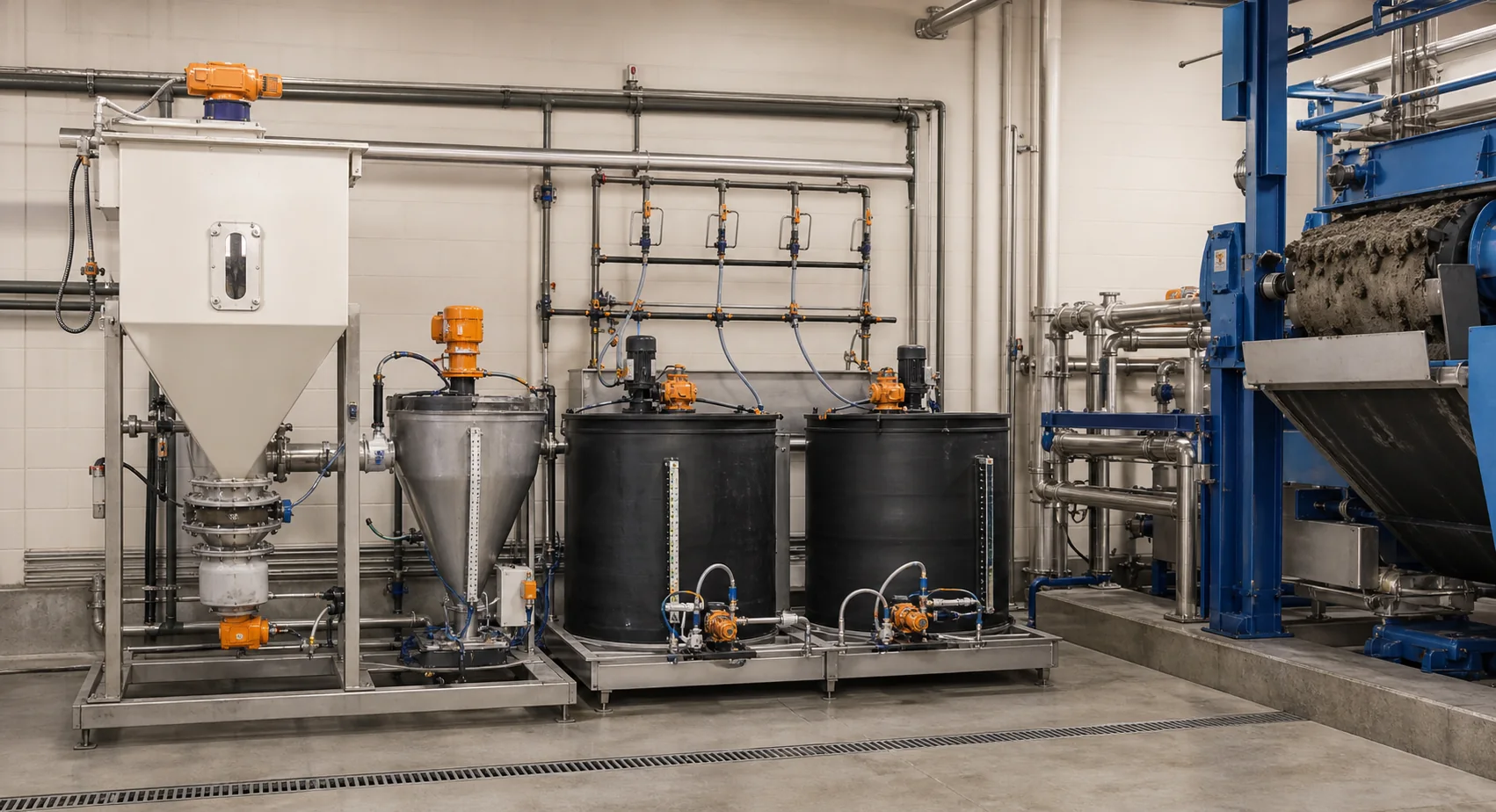
Prepare the candidate using representative plant water and realistic mixing, concentration and residence. Compare solution performance at the production withdrawal rate, not only after an extended laboratory wait. Verify whether tank sequencing still provides the required aging when peak solids loading increases solution demand.
Use a freshly prepared reference on the same sludge to separate incomplete make-down from an unsuitable grade. If warming, dilution or longer residence is proposed, assess the equipment and utility implications before purchasing stock. Avoid inventing a universal adjustment because water quality, product and unit design also influence preparation.
Confirm seasonal separator performance
Recalculate active dose from current feed solids and calibrated product delivery. Record cake, capture, liquid solids, throughput and relevant torque or wash observations after stabilization. A higher winter pump setting alone cannot establish that the product's active consumption has increased or that a new grade is needed.
Repeat the preferred condition during a representative operating window and retain preparation details with the trial. If the new grade works only under a method the unit cannot sustain, classify it as conditionally qualified. A quotation should not receive credit for a laboratory result that requires unavailable plant capacity.
Buy a protected and replenishable stock position
Confirm delivery lead time, package handling, sheltered storage and stock rotation against documented conditions. Estimate inventory from measured consumption and a reasonable replenishment allowance rather than assuming a large seasonal purchase is always safer. Damaged or improperly stored material can undermine a technically sound supply program.
Include the seasonal preparation result, expected operating range and destination in the RFQ. Keep the approved product code and lot traceability intact. Review the stock plan as temperature and demand change, with a documented trigger for another preparation check rather than an automatic switch to a stronger-sounding polymer.
Prepare a focused sample and quotation request
Record the seasonal make-down water temperature, qualified preparation method and the inventory replenishment window. Ask the supplier to confirm code-specific storage requirements rather than treating an additional winter pallet as a substitute for a preparation-capacity check. Preserve the baseline from the corresponding operating qualification.
Related purchase checks: Dry Sludge Dewatering Polymer Purchase: Check Feeder and Aging Capacity; Emulsion Sludge Dewatering Polymer Quotes: Review the Conversion Scope. Submit the defined requirement with the sludge polymer sample and quotation request.