
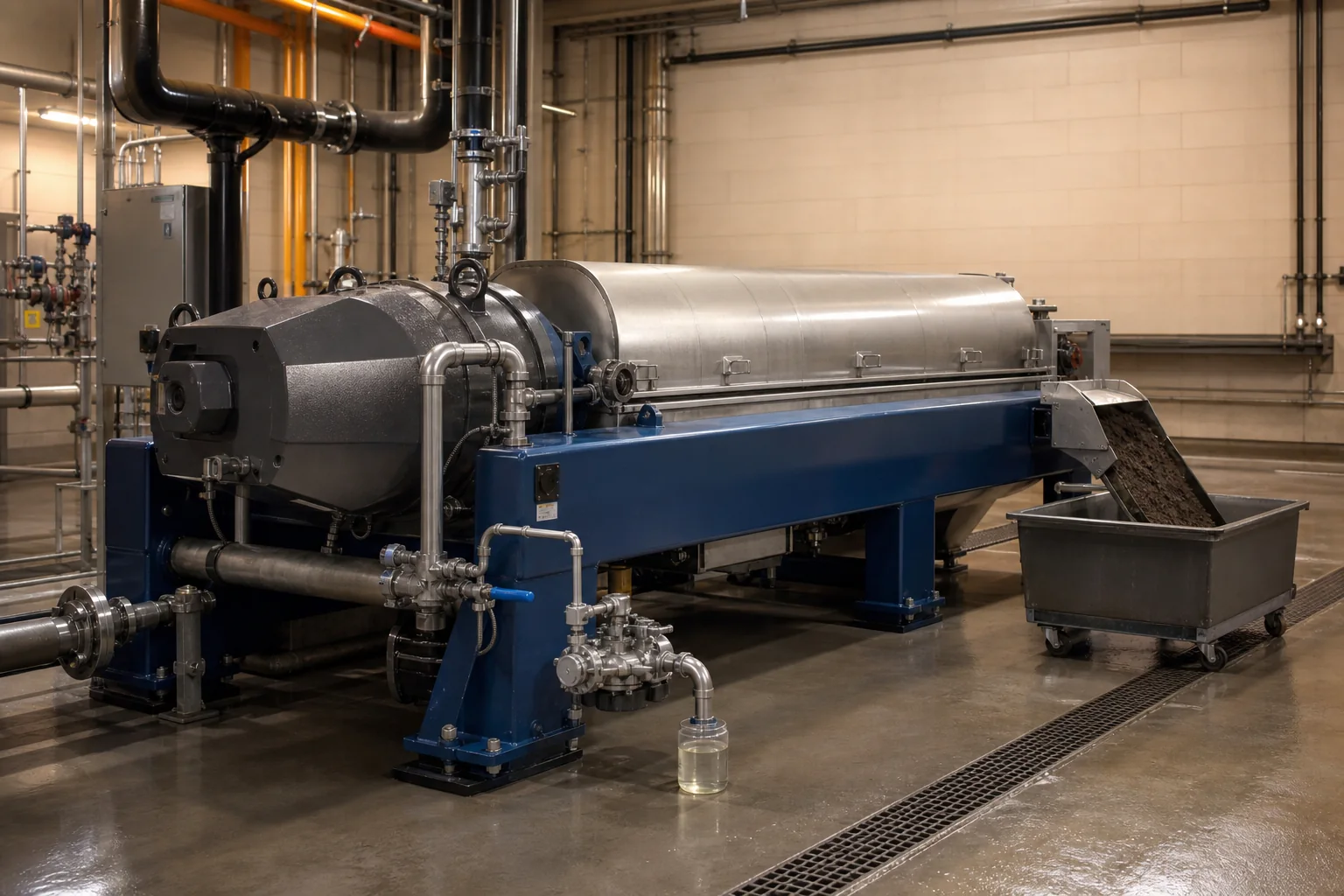
Treat the temporary job as a bounded process
Mobile dewatering may combine variable stored sludge with hired equipment, unfamiliar water and a limited work window. Identify the sludge source, access constraints, estimated dry-solids quantity and intended separator. Distinguish an estimate used for logistics from the measured load required for chemical acceptance and consumption reconciliation.
Obtain representative samples before mobilization where practical, including materially different layers or sources. Follow the plant sampling and safety plan; a polymer supplier's screen does not establish safe access or contaminated-material handling. Keep source variability visible rather than relying on one convenient surface sample.
Confirm utilities and preparation responsibility
Name who provides the feeder or activation unit, water, power, tanks, operators and metering equipment. Check available water quality and preparation capacity at sustained job throughput. A grade screened using a well-controlled permanent plant system may fail to realize its result through an undersized temporary make-down arrangement.
Request code-specific preparation instructions and establish a fresh-solution reference at commissioning. Calibrate delivered output and record feed solids. Keep changes to rental-machine settings separate from initial chemistry comparison so the apparent optimum is not simply the result of a mechanical adjustment.
Stage quantity around measured progress
Estimate initial consumption using the qualified active-dose range and expected dry-solids loading, then include justified transition and contingency allowances. State package sizes, unloading access, protected storage and transport lead time. Do not calculate a job total from wet volume alone when feed solids are uncertain.
Where feasible, use staged deliveries and update requirements from actual treated solids and accepted consumption. Agree what happens to unopened stock and packaging without assuming return rights. A large reserve is not useful if it cannot be stored correctly or moved when the job changes location.
Set daily release and escalation checks
Monitor capture, liquid quality, cake handling, throughput and dose as excavation or transfer reaches different material. Retain lot and source identity in daily records. Define a pause or re-screen trigger when the feed departs materially from the original sample, rather than raising polymer output without diagnosing the new duty.
The purchase brief should include mobilization dates, equipment responsibility, tested source range, delivery sequence and documentary needs. Request a bounded candidate set and clear technical-support scope. Successful qualification supports the demonstrated job conditions; it does not guarantee every buried or stored sludge layer will behave identically.
Prepare a focused sample and quotation request
Send the source-sampling limits, mobilization window, rental-machine responsibilities and staged quantity estimate. Confirm unloading and protected storage at the job location; a useful dispatch plan must account for both the chemical duty and temporary-site constraints. Preserve the baseline from the corresponding operating qualification.
Related purchase checks: How Much Sludge Dewatering Polymer Should a Plant Trial Order Include?; Dry Sludge Dewatering Polymer Purchase: Check Feeder and Aging Capacity. Submit the defined requirement with the sludge polymer sample and quotation request.